8 Things to Get in Writing Before Migrating Investor Data
 Jacob BlackettLast Updated: Oct 26, 2026
TL;DR
- Investor data migration is the move of a sponsor's investor records and investment history from one platform to another.
- Switching has a real cost, and the safest migrations name that cost in writing before any data moves.
- Historical distributions and ownership records matter most to the controller, because the next distribution depends on them.
- Ask who moves the data and who checks it, and put those names and the sign-off points in the agreement.
- A migration can run alongside a live raise when the plan says which system holds each new commitment during the switch.
- SponsorCloud's pricing page states that complete data migration is included, and the scope of that work still belongs in writing.
To switch investor portals without losing data, a sponsor migrating investor data should get eight commitments in writing before the move. Those commitments cover the records in scope, historical distributions and Schedule K-1s, ownership records, who does the work, how the switch runs beside a live raise, what investors see, the rollback plan and the full cost.
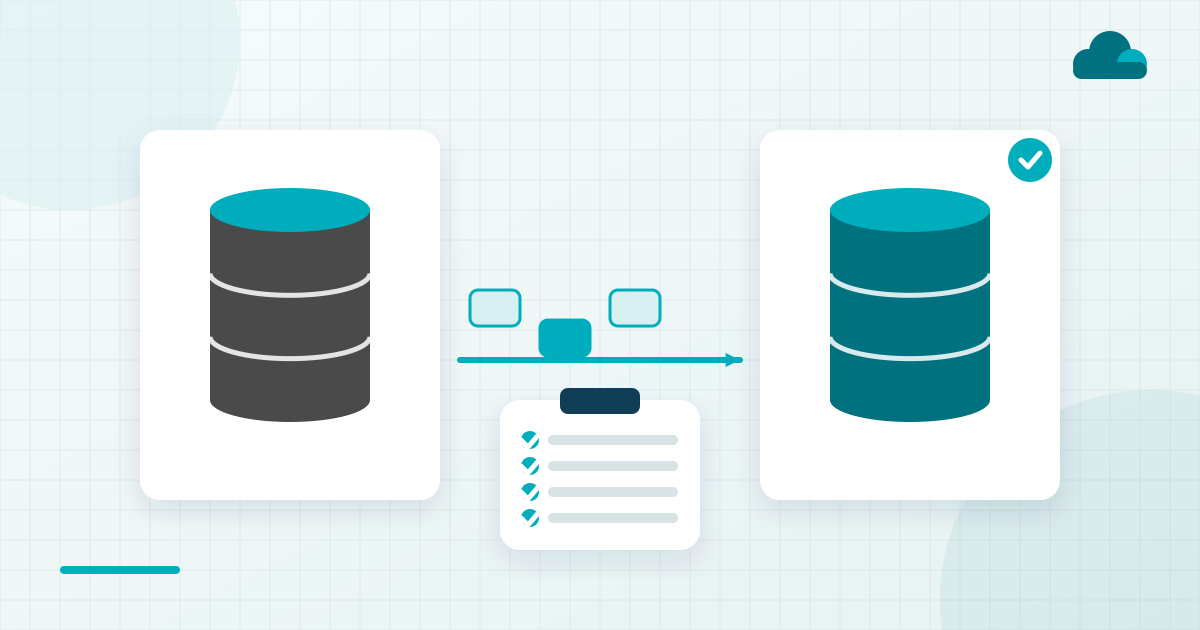
Migrating investor data means moving a commercial real estate (CRE) sponsor's investor records, ownership history, distribution history and documents from one investor platform to another. The work is complete when every investor, entity, distribution and tax document in the old system can be found and reconciled in the new one.
What Investor Data Migration Covers for a Sponsor
Switching investor platforms has a real cost, and a sponsor's hesitation usually comes down to trust in the data. Years of limited partner (LP) ownership history sit in the old system, and nobody wants to rebuild them by hand. A migration earns that trust when the process is named in detail before any record moves.
The person who carries the risk is usually the controller or fund accountant. That role reconciles the books and supports K-1 preparation, so any gap a migration leaves lands on that desk. The checklist below is written for that reader.
Each commitment was chosen against four criteria. It protects a record the sponsor cannot rebuild, names who does the work, can be written into the order form and applies whichever platform the sponsor picks.
The Eight Commitments at a Glance
The table below pairs each commitment with the written promise to ask for and the person who signs it off.
| Commitment | What to Get in Writing | Who Signs Off |
|---|---|---|
| Every record in scope | Each record type that moves | Controller |
| Historical distributions and K-1s | Every payment and past K-1 kept | Controller |
| Ownership and allocation records | Entity ownership reconciled to old system | Controller |
| Who does the work | Named people and batch sign-offs | Controller and vendor lead |
| Switch alongside a live raise | One system for new commitments | Head of capital markets |
| What investors see | Investor message and its timing | Investor relations lead |
| Rollback and reconciliation plan | Error fixes and totals check | Controller |
| Full cost, including team time | Every fee and staff estimate | Managing partner |
Every row has an owner on the sponsor's side. A commitment with no named person signing it off can slip once the vendor's project team moves on to the next batch.
Eight Things to Get in Writing Before Migrating Investor Data
Each commitment below uses the same three labels in the same order, so the eight can be compared side by side.
Every Record in Scope, Listed by Type
Why it matters. Anything left off the scope list may stay behind in the old system. The controller tends to find the gap later, when an investor asks for a document that never arrived.
What to get in writing. A list of each record type that moves, such as investor profiles, entities, contacts, subscription documents, communications history and data room files. Ask the vendor to mark which items its import covers and which need manual work by the sponsor's team.
How to check it. Count records by type in both systems before sign-off. Open a sample of investor files in the new platform and confirm the documents attached to each one.
Historical Distributions and K-1s
Why it matters. Past distributions and issued K-1s are the history investors and auditors ask about. The next distribution also depends on knowing what each investor has already received.
What to get in writing. Confirmation that each payment keeps its date and amount, and that past K-1s stay available for investors to download in the new portal. Name the person who confirms the distribution totals for each entity.
How to check it. Compare a sample of investors against the old system, payment by payment, before signing off.
Ownership and Allocation Records
Why it matters. Cap tables and capital account balances drive every waterfall calculation and every future distribution. An ownership error carried into the new system repeats each time money goes out.
What to get in writing. A reconciliation of each entity's ownership in the new system against the old one, signed off by the controller. Include co-general partner (co-GP) deals and pooled vehicles, where the separation between sponsors also has to carry across.
How to check it. Run the next distribution calculation in both systems for one entity and compare the results. In co-GP deals, confirm each sponsor sees what it should from its own login.
Who Does the Work and Who Signs Off
Why it matters. Migration support means different things from different vendors. A controller cannot check a process when nobody has said who runs each step.
What to get in writing. The names of the people who map and load the data, and the point at which the controller signs off each batch. SponsorCloud names investor migration as part of its offer, with support from people who understand CRE, and that commitment belongs in writing too.
How to check it. Hold each batch until the named person has confirmed it and the controller has signed. Keep the sign-off record with the migration file so anyone can see which batches are closed.
How the Switch Runs Alongside a Live Raise
Why it matters. A raise in progress keeps moving during a migration. Sponsors lose investors in the weeks between soft commitment and wire, which makes that stretch the worst time for an investor to meet a new process.
What to get in writing. Which system holds new commitments during the switch and how investors who are mid-subscription are handled. Set the cutover between closing dates so no investor meets two processes before the wire.
How to check it. Before cutover, list every open commitment and the system that holds it. After cutover, confirm each one appears once in the new pipeline with its next step intact.
What Investors See and When They See It
Why it matters. Investors notice a migration through a new login and a new portal. They judge the sponsor on whether documents are easy to find after the move and whether someone answers their questions.
What to get in writing. The investor message and its send date, agreed before anything goes out, with a named person to answer replies. Test the investor view of a real record before the message is approved.
How to check it. Log in as a test investor and open the documents and distributions tied to a real record. Fix anything missing before the message is sent.
A Rollback and Reconciliation Plan
Why it matters. Some batches fail a check. The plan for that moment decides whether an error is corrected cleanly or carried into the live system.
What to get in writing. How a failed batch is corrected and who confirms the totals match before the switch is final. Keep the old records readable until the first distribution from the new system reconciles.
How to check it. Reconcile the first distribution run from the new platform against the old records. Switch the old system off once that reconciliation closes.
The Full Cost, Including the Team's Time
Why it matters. Switching has a real cost in vendor fees and in staff hours spent checking records. A plan that leaves out the team's time puts the strain on the controller later.
What to get in writing. Any migration or onboarding fee, and an honest estimate of the controller's time. The SponsorCloud pricing and data migration page states that complete data migration is included with no setup costs, and pricing is quoted per portfolio.
How to check it. Compare invoices against the written quote once the move is done. Track the hours the team spent checking records so the next plan starts from a known figure.
How to Migrate Investor Data During an Active Raise
Migrate investor data during an active raise by moving history first and the live raise last. The raise stays on one named system until a cutover set between closings.
- Map and test historical records against the old system, starting with distributions and ownership.
- Keep every new commitment on one named system until cutover.
- Move live pipeline records on a cutover date set between closings.
- Switch investors over with a single message and a named contact.
On cutover day the raise team stops logging commitments in the old system and works from the new pipeline. One named person answers investor questions, so nobody hears two versions of the change.
How Long Investor Data Migration Takes
The length of an investor data migration depends on the scope list and the condition of the old data. A sponsor with many entities and co-GP structures has more to reconcile than one with a few single-asset deals.
Ask the vendor for a dated plan in writing that gives every batch a named checker and a controller sign-off date. Hold the vendor to that plan and review progress against it at each sign-off.
Choosing Investor Software with Migration Support
Judge a vendor's migration support by its written plan, and compare plans line by line across the shortlist. The plan that names who checks each batch gives the controller the most to hold on to.
SponsorCloud's pricing page states that complete data migration is included. SponsorCloud's investor onboarding software is part of SponsorCloud's investor platform, and a sponsor should ask SponsorCloud for the migration scope in writing, the same as any other vendor.
This article is educational and is not tax or legal advice. To walk through a migration plan for your own records, schedule a consultation with SponsorCloud. A migration done well goes unnoticed by investors, and the written plan is what lets the controller show nothing was lost before the old system is switched off.
FAQs
How Do You Migrate Investor Data to a New Platform?
List every record type that has to move, then agree in writing who maps and checks it and when the controller signs off each batch. Move the history first, meaning distributions, K-1s, ownership records and documents, and reconcile it against the old system. Switch live raise records and investors over last, with one message telling investors what changes.
How Long Does It Take to Migrate Investors to a New Platform?
It depends on the scope list and the condition of the old data, so a fixed answer from anyone is unreliable. Ask the vendor for a dated plan in writing that gives every batch a named checker and a controller sign-off date. Hold the vendor to that plan and review progress against it at every sign-off.
Can You Switch Investor Portals Without Losing Data?
Yes, when the scope is written down before anything moves. Agree which records migrate, including distribution history, K-1s, ownership records and documents, and reconcile each one against the old system before switching it off. Keep the old records readable until the first distribution from the new platform reconciles, so any gap can still be traced.
Can a Sponsor Migrate During an Active Raise?
A sponsor can migrate during an active raise if the plan names one system for new commitments throughout the switch. Set the cutover between closings and move historical records before live pipeline records. Investors in the middle of subscribing should meet one process from start to finish, because the weeks before a wire are when investors are easiest to lose.
What Should an Investor Data Migration Agreement Include?
A migration agreement should list the records in scope, how historical distributions and K-1s carry across, how ownership records are reconciled and who does the work. It should also cover how the switch runs beside a live raise, what investors see, the rollback plan and every fee. Each item needs a named owner and a sign-off point.
Does SponsorCloud Include Data Migration?
SponsorCloud's pricing page states that complete data migration is included, and pricing is quoted per portfolio. A sponsor switching to SponsorCloud should still get the scope in writing, covering which records move and how the switch fits around any live raise. Ask the same of every vendor on the shortlist so the plans can be compared line by line.

Jacob Blackett
CEO and Co-Founder, SponsorCloud
Jacob Blackett is the CEO and co-founder of SponsorCloud. He raised capital and ran commercial real estate as a sponsor before he built software for other sponsors, and he still manages funds today. He built the platform that became SponsorCloud to solve problems in his own raises, tested it against real capital and real deadlines across his own portfolio, and then opened it to other GPs.
Related Signals