How to Get K-1s Out on Time for a Real Estate Syndication
 Jacob BlackettLast Updated: Oct 26, 2026

TL;DR
- A sponsor gets Schedule K-1 forms (K-1s) out on time by finishing the work they depend on early, starting with closed books and reconciled capital accounts.
- K-1s run late when upstream work slips, such as property financials that arrive after year end or ownership records that disagree with the operating agreement.
- Multi-state filings and K-1s from lower-tier partnerships add dependencies a sponsor does not control, so the calendar is built backwards from them.
- Delivering K-1s through an investor portal, with a notice to each investor, keeps one record of which K-1 went to which investor.
- Sponsors either prepare K-1s with their own accountant and an outside certified public accountant (CPA) firm, or use a K-1 preparation service that works from the investor platform's records.
- SponsorCloud runs K-1 workflows in its investor platform, and its in-house CPAs prepare and deliver K-1s as a service.
A K-1 preparation service for a real estate syndication closes the books with the sponsor, prepares the partnership return and each investor's K-1, handles multi-state filings and delivers the K-1s through the investor portal.
A K-1 is the tax form, formally Schedule K-1, a real estate partnership issues to each investor to report that investor's share of the partnership's income, deductions, credits and other tax items for the year.
Getting K-1s out on time means finishing the partnership return and every investor's K-1 early enough for investors to file their own returns. K-1s go out on time when the work starts from clean ownership records and a calendar set backwards from the filing deadline.
What Getting K-1s Out on Time Means for a Sponsor
A K-1 gives each limited partner (LP) their share of the partnership's tax items, and the investor needs it to complete a personal return. A late K-1 starts as the investor's problem and comes back to the sponsor as questions from investors waiting to file.
The partnership return and its K-1s share a federal due date set out in the Internal Revenue Service (IRS) instructions for Form 1065, and a partnership that files for an extension also has longer to furnish its K-1s. An investor still waiting on a K-1 may need to extend their own return, so the sponsor's timing becomes part of every investor's tax season.
Sponsors run K-1s in two halves. One half is a workflow inside the investor platform, next to distributions and investor reporting, and the other is the CPA work that turns closed books into returns. SponsorCloud's guide to what passive investors should know about the Schedule K-1 tax form covers the investor's side of the form.
Why K-1s Arrive Late
Many K-1 delays start upstream of the tax preparer, in records the sponsor owns. The preparer can begin the partnership return once those records are final, and each late record pushes back every K-1 that depends on it.
Books That Close After the Year Ends
Property-level financials and adjusting entries can arrive well after year end, and the partnership return cannot start until they do. A single property that closes its books late holds up every K-1 in the partnership that owns it.
Ownership Changes During the Year
Transfers between investors and mid-year admissions change each investor's share of income and loss for the year. If the ownership and allocation records disagree with the operating agreement, every affected K-1 waits until someone reconciles them.
Multi-State and Lower-Tier Partnership Filings
Property in other states can add state filings, each under that state's own rules and deadlines. A fund of funds waits on K-1s from the partnerships it invests in, and both dependencies sit outside the sponsor's control.
Each lower-tier partnership runs its own K-1 timeline, and the upper-tier return waits for it. A fund of funds with several lower-tier investments waits for the last of those timelines.
Investor Records with Errors
Wrong tax IDs and outdated mailing addresses surface at release and send K-1s back for correction. Investor profile audits sit in the K-1 workflow so those errors are found before the forms go out.
How to Deliver K-1s to Investors on Time
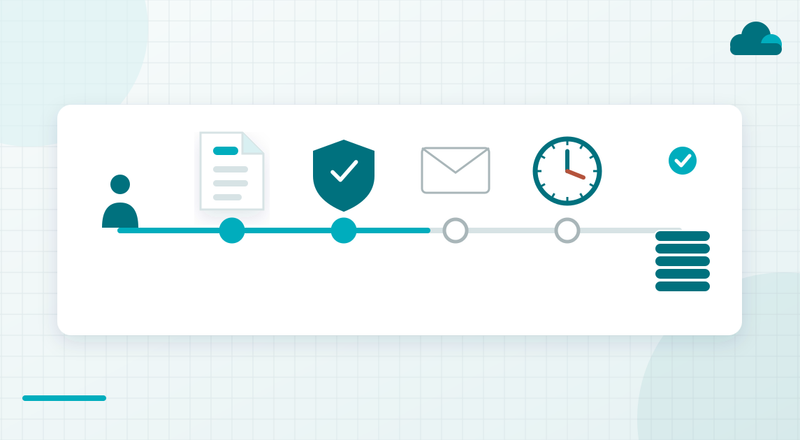
The eight steps below follow the order the work depends on. Each step is general practice, and the sponsor's CPA sets the actual dates.
Set the K-1 Calendar Backwards from the Filing Deadline
Start from the partnership's federal filing date and work back, leaving room for state filings and K-1s owed by lower-tier partnerships. Decide early whether the partnership plans to file on extension, and tell investors which it will be.
Give each upstream record a due date on the calendar, from property financials to lower-tier K-1s. A late item then shows up while there is still time to act on it.
Close the Books and Reconcile Capital Accounts
Finalize property financials and record every distribution paid and contribution received during the year. Reconcile those figures to each investor's capital account before the preparer starts the return.
Distributions recorded in the investor platform during the year give the preparer a starting point to reconcile against. Any difference between the bank record and the investor record is resolved at this step.
Confirm Ownership and Allocation for Every Investor
Check each investor's share against the operating agreement and the distribution waterfall. Include anyone admitted or transferred during the year, because their allocations changed partway through it.
Ownership and allocation records kept in the investor platform turn this check into a comparison against one source. A transfer recorded late in the year is easy to miss at this stage.
Prepare the Partnership Return and Each Investor's K-1
Prepare the partnership return first, because each K-1 follows from it. A K-1 preparation service usually covers the entity tax return along with the investor forms.
Questions from the preparer go back to whoever owns the record in question. Name who answers them before the work starts, so each question has an owner.
File the State Returns the Property Requires
Identify each state where the property or its income creates a filing obligation. State rules differ, so the CPA confirms which returns and investor filings apply.
Some states require the partnership to withhold tax or file a composite return on behalf of investors who live elsewhere. Those obligations can change what investors receive alongside their K-1s, so they belong on the calendar from the start.
Audit Investor Profiles Before Release
Check names, tax IDs, entity types and addresses before any K-1 goes out. A correction caught at this step saves a reissued form after release. Entity investors such as trusts and companies need the correct entity type on file, because the K-1 records what type of entity each partner is.
Deliver K-1s Through the Investor Portal
Post each K-1 to the investor's portal account and send a notice that it is ready. One channel gives the sponsor one record of which version each investor received.
The notice should say where the K-1 sits and who to contact with questions. Posting K-1s and sending notices from the same system keeps delivery and the investor record together.
Answer Investor Questions from the Same Record
Answer questions about allocations or distributions from the same investor record the K-1 came from. The answer then matches the form the investor is holding.
When a question shows an error, the correction goes back through the earlier steps. The reissued K-1 then reaches the investor through the same portal as the first one.
How Sponsors Handle K-1 Delivery to a Large Investor Base
K-1 distribution software posts each investor's K-1 to a secure portal account and notifies the investor that it is ready. Sponsors move to it when emailed attachments and a spreadsheet of who received what stop holding up as the investor base grows.
A growing investor base also means more investors asking when their K-1 will arrive. One notice sent through the portal answers that question for all of them at once.
Corrected K-1s go through the same channel, so each investor sees the current version and the sponsor can show which version was sent. Inside an investor platform, the delivery record sits next to the investor's capital account and distribution history.
When an investor holds through a retirement account, the account is the partner, so its K-1 may need to go to the account's custodian. Confirm how those forms are handled with the CPA before release.
Who Prepares K-1s for a Real Estate Fund
The partnership is responsible for issuing K-1s, and a CPA usually prepares them. The sponsor's team supplies the closed books and ownership records the CPA works from.
Preparing K-1s with an Outside CPA Firm
The sponsor's accountant closes the books and hands the records to an outside CPA firm, which prepares the returns and K-1s. The setup works while the deal count is small, and the hand-off between the two teams is where delays tend to enter.
The CPA firm works from the records as they stood at hand-off. Any question about allocations travels back to the sponsor's team and waits there for an answer.
Using an Outsourced K-1 Preparation Service
An outsourced K-1 preparation service prepares the returns and K-1s from the investor platform's records and delivers them through the same portal. Fewer hand-offs sit between the records and the preparer, which serves the job sponsors describe of producing more output without adding the same administrative labor.
How to Decide Between the Two
The need changes with the sponsor's stage, from basic filings and K-1s for an early-stage sponsor to institutional-grade CPA work for a sponsor running several funds. Moving from deal-by-deal raises to funds is the common point to revisit the choice.
Sponsors adding a first fund or lower-tier partnerships see the number of hand-offs rise. A service that works from the investor platform's records starts to fit at that point.
How SponsorCloud Handles K-1 Season
SponsorCloud is an investor platform for commercial real estate (CRE) sponsors, with a customer relationship management (CRM) system and growth tools on the same investor record. K-1 workflows sit inside the platform alongside distributions and investor reporting.
SponsorCloud's real estate tax services cover K-1 preparation and delivery for all investors, entity tax returns, multi-state filings and investor profile audits. Tax documents reach investors through the SponsorCloud investor portal, and in-house CPAs perform the work as part of SponsorCloud's professional services.
Harisimran Khalsa, CPA, is President of Professional Services, and Justin Shen, CPA, is Head of Fund Administration. I built the platform to solve my own operating problems while running raises, then opened it to other general partners (GPs).
How to Plan Next K-1 Season Before This One Ends
Write down what ran late this season and which record it traced back to. Fix that record before the next year closes, so next season starts from reconciled books and current ownership data. Then set next season's calendar from the filing deadline, with an owner named for each upstream record.
The guidance on this page is educational and is not tax or legal advice, so confirm deadlines and filing obligations with a CPA. To plan next season's K-1 workflow on one investor record, schedule a consultation with SponsorCloud.
K-1 season is decided in the months before it starts, in the records and the calendar a sponsor sets up while the year is still open.
FAQs
Who Prepares K-1s for a Real Estate Syndication?
The partnership is responsible for issuing K-1s, and a CPA usually prepares them from the sponsor's closed books and ownership records. Some sponsors use an outside CPA firm alongside their own accountant, and others use a K-1 preparation service that works from the investor platform's records and delivers through the same portal. This answer is educational and is not tax or legal advice.
Why Do K-1s Arrive Late?
K-1s arrive late when the work they depend on slips. The common causes are property financials that arrive after year end, ownership changes during the year, state filings for property in other states and K-1s still owed by lower-tier partnerships. Investor records with errors add delays at release, when a wrong tax ID sends a K-1 back for correction.
How Do Sponsors Deliver K-1s to Many Investors?
Sponsors with a growing investor base commonly post each K-1 to the investor's account in an investor portal and send a notice that it is ready. One channel keeps one record of which version each investor received, which matters when a K-1 is corrected. Emailed attachments become hard to track as investor count grows.
What Is K-1 Distribution Software?
K-1 distribution software posts each investor's K-1 to a secure portal account and notifies the investor that it is ready. Inside an investor platform it reads from the same investor record as distributions and ownership, so the K-1 an investor downloads matches the capital account they see. A CPA still prepares the K-1 that the software delivers.
Should a Sponsor Outsource K-1 Preparation?
It depends on the sponsor's stage and structure. A sponsor with a few deals and a strong outside CPA may keep the current setup. Sponsors moving from deal-by-deal raises to funds, or adding states and lower-tier partnerships, often look for a service that works from the same records as the investor platform to cut hand-offs.
What Should a Sponsor Tell Investors While K-1s Are Being Prepared?
Tell investors early whether the partnership expects to file on time or on extension, and say how K-1s will reach them. A short notice through the investor portal answers the question before investors ask it and lets them plan their own filing. Confirm any dates you share with your CPA before sending them.

Jacob Blackett
CEO and Co-Founder, SponsorCloud
Jacob Blackett is the CEO and co-founder of SponsorCloud. He raised capital and ran commercial real estate as a sponsor before he built software for other sponsors, and he still manages funds today. He built the platform that became SponsorCloud to solve problems in his own raises, tested it against real capital and real deadlines across his own portfolio, and then opened it to other GPs.
Related Signals